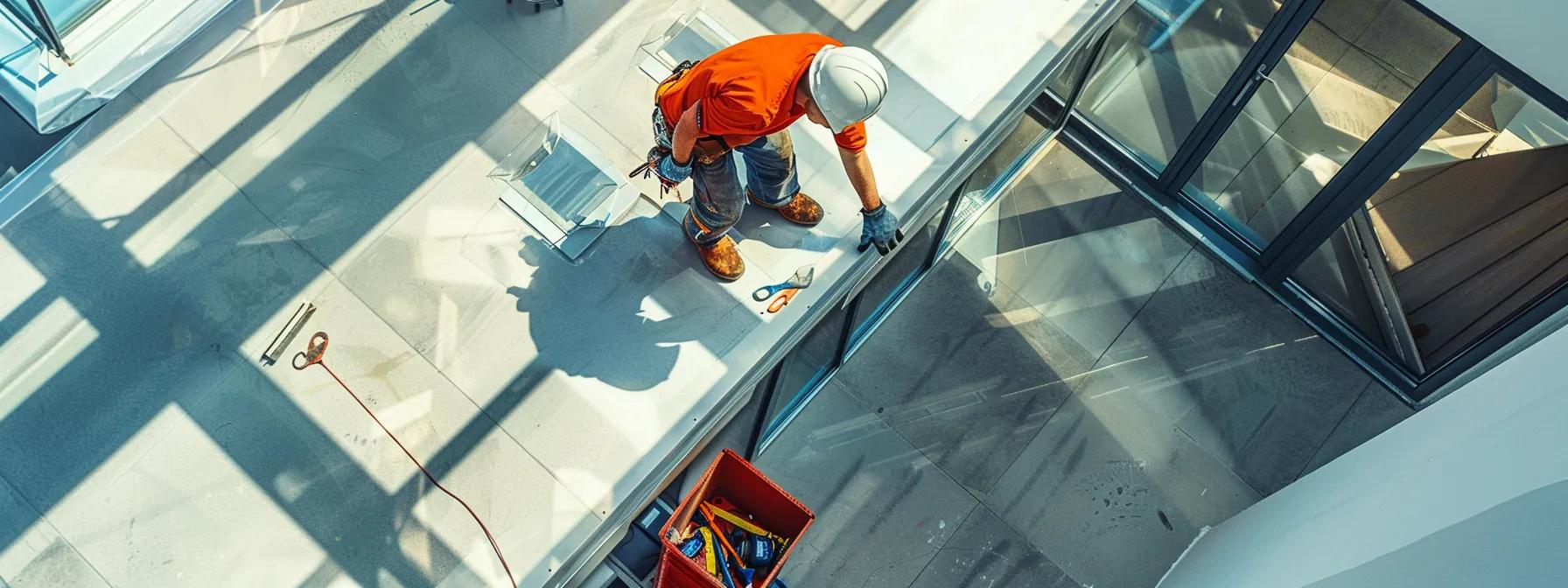

Eavestrough Cleaning Before Winter: Ontario Homeowner's Guide (2026)
There is one eavestrough maintenance task that matters more than every other combined: the fall clean before freeze-up. In Ontario, blocked gutters heading into winter are the leading cause of ice dams, soffit rot, and foundation flooding — damage that costs far more to repair than an afternoon on a ladder ever would. This guide covers the optimal timing for every Ontario climate zone, a practical step-by-step cleaning checklist, what to inspect while you're up there, and when to call in a professional instead.
According to the Insurance Bureau of Canada, water damage is now the leading cause of home insurance claims in Canada, surpassing fire damage. A large portion of those claims trace back to preventable drainage failures — blocked eavestroughs at the top of the list. A properly cleaned and functioning eavestrough system is one of the simplest protections any Ontario homeowner can maintain.
Why Fall Eavestrough Cleaning Is Non-Negotiable in Ontario
Southern Ontario's mix of mature trees — sugar maple, Norway maple, oak, and Manitoba maple — drops a dense layer of leaves from late September through mid-November. During that window, an average bungalow can accumulate 20–40 pounds of wet leaves in its eavestroughs. When those leaves compact and freeze, they become a solid plug that turns every snow melt event into a roofline water problem.
The freeze-thaw cycle in Ontario is particularly destructive. Unlike climates where winter temperatures stay consistently below freezing, Ontario regularly swings between −15°C nights and above-zero afternoons from November through March. Each melt-and-refreeze cycle pushes ice further back under the shingles and deeper into fascia joints. Blocked eavestroughs are almost always the starting point for ice dam formation — a topic covered in depth in our guide to ice dam prevention with heated gutter guards.
The stakes extend below grade too. When meltwater can't drain through packed gutters, it spills over the edge closest to the foundation, saturates the soil against the footings, and — in homes without adequate grading — enters the basement. This kind of water intrusion is almost impossible to trace back to its source without a professional inspection.
When to Clean Eavestroughs Before Winter in Ontario
Timing the fall cleaning correctly is as important as doing it at all. Clean too early — say, in September when most leaves are still on the trees — and you'll end up with a second full load of debris by late October. Clean too late, after the first hard freeze, and you're working in dangerous icy conditions with gutters that may already be partially blocked with frozen debris.
Here are the recommended windows by Ontario climate zone:
- GTA, Hamilton, Kitchener-Waterloo, London: Late October through mid-November. Peak leaf fall for most deciduous species in these regions concludes by Nov 1–10, giving a clean window before typical first freeze (Environment and Climate Change Canada places average first frost for Toronto at October 30 and Hamilton at November 3). See Environment Canada climate data for your specific municipality.
- Barrie, Simcoe County, Collingwood: Early to mid-October. Lake-effect systems and earlier frost dates compress the cleaning window. Barrie's average first hard frost falls in early October. If you leave it until November in cottage country, you may find the debris already frozen in place.
- Niagara, Windsor, Essex County: November and into early December. Moderated by Lake Erie and Lake Ontario, these areas enjoy Ontario's mildest autumns and latest leaf drop. A single late-November cleaning typically suffices.
- Ottawa and Eastern Ontario: Early to mid-October. Continental climate brings early freeze-up. One cleaning in the first two weeks of October is often the only safe window before temperatures drop consistently below freezing.
For a broader seasonal view of what to do year-round, see our complete seasonal eavestrough maintenance checklist. And if you're wondering how often Ontario's weather demands cleaning in total, our guide to how often to clean gutters in Ontario breaks it down by region and tree coverage.
Step-by-Step Fall Eavestrough Cleaning
For a single-storey home with straightforward roof access, fall cleaning is a manageable DIY task. Here's the full process:
- Gather your equipment. You need a sturdy extension ladder with stand-off stabilizers (never lean the ladder against the gutter itself — it deforms aluminum), rubber-grip work gloves, a gutter scoop or small trowel, a five-gallon bucket hung from the ladder, and a garden hose with a spray nozzle.
- Start at the downspout. Working away from the downspout prevents you from pushing debris down into it and creating a blockage. Scoop wet leaves from the gutter channel into the bucket. Wet autumn debris is heavy — don't let the bucket overfill.
- Flush toward the downspout. Once the debris is removed, run your garden hose from the far end of each run toward the downspout at medium pressure. This clears fine sediment and confirms the downspout is flowing freely.
- Check downspout flow. Hold your hand over the bottom of each downspout outlet while running the hose at the top. You should feel steady, strong flow within a few seconds. A weak trickle or backup indicates a partial blockage — usually a ball of compacted debris at the first elbow. Most blockages can be cleared from below with a plumber's auger or from above with a high-pressure garden hose nozzle.
- Extend downspout outlets. Confirm that downspout extensions direct water at least 1.5–2 metres from the foundation. In Ontario, soil freezes and expands against foundation walls in winter; meltwater pooling at the base accelerates this pressure. Short downspouts are one of the most common and preventable causes of winter foundation damage.
- Clean up. Eavestrough debris is excellent compost material. Dump your bucket into the compost rather than the green bin — the fine organic material breaks down quickly.
What to Inspect During the Fall Clean
While you're up the ladder, this is your best annual opportunity to inspect the full system before it spends six months under Ontario's heaviest weather loads. Work through this checklist:
- Sag and alignment. Sight down the length of each eavestrough run. It should slope consistently toward the downspout — typically 6–10 mm of drop per 3 metres of run. Flat sections hold standing water that accelerates corrosion. Sections sagging away from the roofline indicate failed hangers or fascia deterioration beneath.
- Joint condition. Sectional gutters (pre-2000 construction typically) have joints every 10 feet sealed with gutter caulk. Check each joint for separation, cracking, or rust staining below it on the fascia. Even small gaps become serious problems once ice forces them wider.
- End caps. Check both ends of every run. A loose or cracked end cap will let water run directly down the fascia into the soffit below.
- Fascia behind the gutter. Where you can reach, press gently on the fascia board directly behind the gutter bracket. Soft, spongy wood means rot has set in beneath the paint — a sign that water has been escaping from the gutter and wicking into the fascia. This should be addressed before winter, not after, as freeze-thaw will accelerate the deterioration significantly.
- Downspout attachment. Confirm that all downspout straps are secured to the wall and that elbows are tightly connected. Loose downspouts frequently detach entirely under the weight of heavy ice in January and February.
If your inspection turns up significant sagging, fascia rot, or multiple failing joints, getting professional repairs done before freeze-up will save considerably more than the repair cost itself. See our guide on why winter preparation matters for Ontario eavestroughs for a full breakdown of what's at stake.
When to Call a Professional Instead
DIY cleaning is practical for single-storey homes with simple rooflines and ground-level experience with ladders. The calculus changes quickly in these situations:
- Two-storey or higher. At 20+ feet, a ladder slip is a serious injury event. Professional crews work in pairs with roof anchors and stabilized ladder setups — the cost (typically $150–$300 for a standard clean) is minimal compared to the risk.
- Hip or complex rooflines. Homes with multiple valleys, dormers, or L-shaped footprints require repositioning the ladder many times. This dramatically increases the risk of an unstable setup.
- Structural problems found. If your inspection reveals sagging sections, loose fascia, or failed downspout connections, these need to be repaired, not just cleaned. Attempting structural repairs alone, at height, without the right equipment is not advisable.
- Near freeze-up. If you've missed the window and overnight temperatures are already dropping below −3°C, don't attempt cleaning. Frozen debris in the gutter channel requires heat tape or professional thawing — forcing cold, brittle aluminum with a shovel causes permanent deformation.
Should You Install Gutter Guards Before Ontario Winter?
The fall season is one of the best times to install gutter guards — counter-intuitive as that may seem. By mid-November, once the cleaning is done and the last leaves have dropped, the system is empty and free of debris. Installing micro-mesh guards at this point means the eavestrough goes into winter with a clear channel and won't accumulate debris again until spring.
Ontario winters do test gutter guard systems. Micro-mesh stainless steel guards like EavesArmour's system allow meltwater to pass through while keeping out debris, and the mesh surface sheds ice without channeling it into the gutter below. Foam and brush inserts, by contrast, hold ice and can actually accelerate blockage in freeze-thaw conditions. If you're considering guards for the first time, see our detailed breakdown of how EavesArmour's gutter protection system works in Ontario winters for a direct comparison.
Adding guards at the time of a professional fall cleaning typically costs $5–$12 per linear foot on top of the cleaning fee, and eliminates the need for routine cleaning on most properties for years afterward. For an average Ontario detached home (140–180 linear feet), that's a one-time cost that removes one of the most injury-prone home maintenance tasks from your annual calendar.
Ready to protect your eavestroughs before winter? Get a free estimate from EavesArmour — we serve Hamilton, Burlington, Kitchener-Waterloo, Barrie, Niagara, and communities across Southern Ontario.
Frequently Asked Questions
When is the best time to clean eavestroughs before winter in Ontario?
The optimal window is after peak leaf fall but before overnight temperatures consistently drop below −5°C. In the GTA, Hamilton, and Kitchener-Waterloo, that's typically late October through mid-November. In Barrie and Eastern Ontario, the window closes earlier — aim for the first two weeks of October. In Niagara and Windsor, November through early December is usually safe.
Can I clean eavestroughs after it snows or when temperatures are near freezing?
Working on a ladder in near-freezing temperatures or with any snow or ice on the roof is a serious safety risk. Beyond the safety concern, frozen debris in the gutter channel requires thawing before it can be removed safely — forcing brittle aluminum with a trowel or scoop in cold weather cracks the gutter profile. If temperatures have already dropped, call a professional rather than attempting it yourself.
How much does professional eavestrough cleaning cost in Ontario?
Professional eavestrough cleaning in Ontario typically costs $150–$350 for a standard two-storey detached home, including flushing downspouts and minor debris removal from the property. Prices are higher for multi-storey homes, complex rooflines, and heavily debris-laden systems. Scheduling in late October — before the peak demand rush in November — can help secure better availability and pricing.
Do gutter guards eliminate the need for fall eavestrough cleaning?
High-quality micro-mesh gutter guards significantly reduce the frequency of cleaning needed. Most Ontario homeowners with a properly installed micro-mesh system go 3–5 years between professional inspections rather than cleaning annually. However, guards do not eliminate maintenance entirely — a periodic inspection to confirm the mesh surface is clear and downspouts are flowing is still recommended every few years, particularly after heavy debris seasons.
What happens if I don't clean my eavestroughs before winter in Ontario?
Blocked eavestroughs entering a Canadian winter are the primary cause of ice dam formation. When gutters are packed with debris, meltwater from the roof has nowhere to go and refreezes at the eave line. Each freeze-thaw cycle pushes ice further under the shingles, into the fascia, and eventually through the soffit into the attic or wall cavity. The resulting moisture damage — to insulation, drywall, and framing — routinely costs $5,000–$25,000+ to remediate, far exceeding any cleaning cost.
Topics Covered
Written by
EavesArmour Team
Our team of gutter protection experts brings over 15 years of experience helping Ontario homeowners protect their properties with industry-leading gutter guard systems backed by a lifetime warranty.