
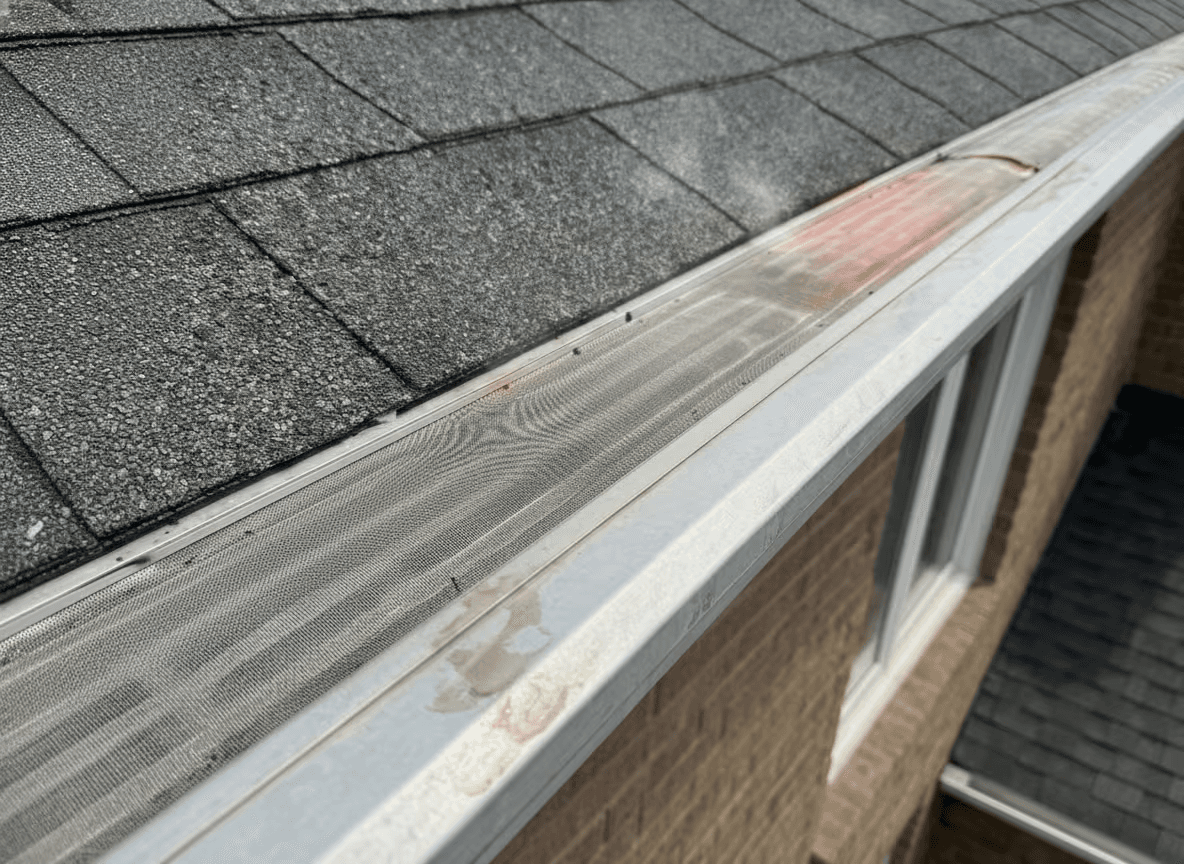
Various types of gutter guards
2026 Buyer's Guide

Gutter Guard Types Compared

Every major gutter guard type — micro-mesh, foam, reverse-curve, screen, brush, and heated systems — compared on price, lifespan, debris blocking, and Ontario winter performance.

The 30-Second Verdict

For Ontario homes, the only two gutter guard types we recommend for long-term performance are stainless steel micro-mesh and heated micro-mesh (for ice-dam-prone homes). Everything else — foam, brush, screen, reverse-curve — has significant tradeoffs that make them poor matches for our climate, our rainfall intensity, and our winters. The rest of this page explains why.

All 6 Gutter Guard Types — Honest Breakdown

Ratings reflect our field experience installing and replacing every type of gutter guard across Ontario for 15+ years.

Micro-Mesh (Stainless Steel)

★★★★★5/5 for Ontario

Best for: Long-term homeowners, ice-prone homes, pine-heavy yards, anyone who wants to never climb a ladder again.

Pros

  • Blocks the smallest debris (down to 275 microns)
  • Survives Ontario freeze-thaw cycles
  • 20–40 year lifespan
  • Handles 22+ inches of rain per hour
  • Can be paired with heated cable for ice dam prevention

Cons

  • Higher upfront cost than foam or screen
  • Requires professional installation for warranty
Typical cost: $15–$30 / linear foot installed
Lifespan: 25–40 years
Ontario verdict

The strongest all-round performer for Ontario homes. The 316 stainless steel mesh used in EavesArmour systems is the same grade used in surgical instruments — it will not rust or corrode.

Reverse-Curve (Surface Tension)

★★★☆☆3/5 for Ontario

Best for: Light-rain areas with minimal heavy storms (rare in Ontario).

Pros

  • Lets water slip around a curved edge into the gutter
  • Generally long-lasting metal construction
  • Sheds large leaves effectively

Cons

  • Overshoots in heavy Ontario summer downpours
  • Debris collects on top of the curve
  • Can require periodic top-surface cleaning
  • Often more expensive than micro-mesh for less protection
Typical cost: $15–$30 / linear foot installed
Lifespan: 15–25 years
Ontario verdict

Not our top recommendation for Ontario. The province's heavy rain events frequently cause water to bypass reverse-curve guards entirely.

Screen Guards (Plastic / Aluminum)

★★☆☆☆2/5 for Ontario

Best for: Budget homeowners willing to clean guards manually each year.

Pros

  • Cheapest option upfront
  • Easy DIY installation
  • Blocks large leaves

Cons

  • Larger holes let pine needles, seeds, and grit through
  • Plastic versions become brittle in Ontario UV and cold
  • Frequently fail under ice load
  • Often need to be removed for gutter cleaning
Typical cost: $2–$5 / linear foot (DIY)
Lifespan: 3–10 years
Ontario verdict

A short-term band-aid. Most Ontario screen guard owners replace within a decade — or remove them entirely after enough clogged-screen frustration.

Foam Inserts

★☆☆☆☆1/5 for Ontario

Best for: Almost no Ontario use case we recommend.

Pros

  • Cheap and easy to install
  • No screws or brackets required

Cons

  • Holds moisture and breaks down
  • Becomes a seedbed for plant growth in the gutter
  • Frozen waterlogged foam can sag and detach gutters
  • Often needs replacement every 2–4 years
Typical cost: $1–$3 / linear foot (DIY)
Lifespan: 2–4 years
Ontario verdict

We do not recommend foam guards for Ontario homes. The combination of moisture retention, mold risk, and winter freeze damage makes them a poor long-term investment.

Brush Guards (Bottle Brush)

★☆☆☆☆1/5 for Ontario

Best for: Quick-and-dirty leaf blockage only.

Pros

  • Very cheap
  • Easy DIY install

Cons

  • Debris weaves into the bristles and is hard to clean
  • Bristles flatten and degrade in cold
  • Pine needles thread straight through
  • Birds and squirrels can nest inside
Typical cost: $3–$6 / linear foot (DIY)
Lifespan: 2–5 years
Ontario verdict

Not recommended. Brush guards collect debris on the bristles rather than shedding it, defeating most of the purpose.

Heated Micro-Mesh (e.g., EavesArmour ICE)

★★★★★5/5 for Ontario

Best for: Ice dam-prone homes, north-facing roofs, shaded eaves, Lake-effect snow zones.

Pros

  • All advantages of micro-mesh, plus active ice prevention
  • Self-regulating heat cable (only draws power when needed)
  • Designed specifically for Canadian winter
  • Reduces insurance claims for ice damming damage

Cons

  • Highest upfront cost
  • Requires electrical connection
Typical cost: $25–$45 / linear foot installed
Lifespan: 20–30 years (cables typically rated 10–15)
Ontario verdict

The gold standard for Ontario homes with a history of ice dams or icicle problems. Pairs the long-term debris protection of micro-mesh with active heat where you need it.

Which Should You Pick? A Simple Decision Tree

Most Ontario homeowners can answer this in 30 seconds.

Have you had ice dams, icicles, or interior water staining in past Ontario winters?

Yes → Look at heated micro-mesh systems like EavesArmour ICE. Standard guards alone will not solve the ice problem.

See EavesArmour ICE →

Do you live in a wooded property with pine trees or heavy leaf load?

Yes → Micro-mesh is the only type that reliably blocks pine needles and small debris. Avoid screen and brush guards.

See micro-mesh gutter guards →

Do you want a one-time install you never have to think about again?

Yes → Stainless steel micro-mesh on aluminum frame with a 25+ year transferable warranty. That is the only category that reliably delivers 'install and forget'.

See our gutter guards →

Managing a multi-unit or commercial portfolio?

Yes → A portfolio program with volume pricing on micro-mesh installation is almost always the cheapest cost-per-foot path.

See property manager programs →
FAQ

Gutter Guard Types — FAQ

For Ontario's climate — heavy rain, falling leaves, pine needles, freeze-thaw cycles, and ice load — micro-mesh gutter guards with a stainless steel mesh on an aluminum frame are the strongest performer overall. They block the smallest debris, handle the highest rainfall rates, and survive winter without warping or collapsing. Foam and brush guards typically fail within a few seasons in Ontario.

Foam gutter inserts are inexpensive, but they hold moisture, decompose, harbour mold, and become a seedbed for plants growing in your gutters. In a Canadian winter, frozen waterlogged foam can also cause gutter sagging and detachment. We do not recommend foam guards for any Ontario home.

Reverse-curve guards rely on water sticking to the curved surface and flowing into a slot at the leading edge. They work well in light rain but can overshoot in heavy downpours common to Ontario summers, sending water over the edge and bypassing the gutter entirely. They also collect debris on top of the curve.

Some DIY screen and snap-in guards exist, but improper installation can void roof and gutter warranties, leave gaps where debris enters, and cause overflow during heavy rain. Big-box guards also use thinner materials that fail under Ontario winter ice load. We strongly recommend professional installation for any guard that is meant to last more than a few seasons.

Quality micro-mesh gutter guards with surgical stainless steel mesh and aluminum frames typically last 25–40 years. EavesArmour micro-mesh systems come with a 40-year transferable warranty. Cheap plastic or thin aluminum guards may fail in 3–10 years in Ontario's climate.

All gutter guards can help slightly by keeping gutters from clogging and overflowing — but standard guards alone do not prevent ice dams. For genuine ice dam prevention in Ontario, look for a heated gutter guard system like EavesArmour ICE that combines micro-mesh with self-regulating heat cables.

Pine needles are the toughest debris because they thread through holes that block leaves. Only micro-mesh with openings under 300 microns reliably keeps pine needles out. Screen and reverse-curve guards typically fail in pine-heavy yards.

Keep researching

Get an Honest Recommendation

We will recommend the right guard type for your roof, your trees, and your winter exposure — even if it is not the most expensive option.