
Diamond Installer
EavesArmour
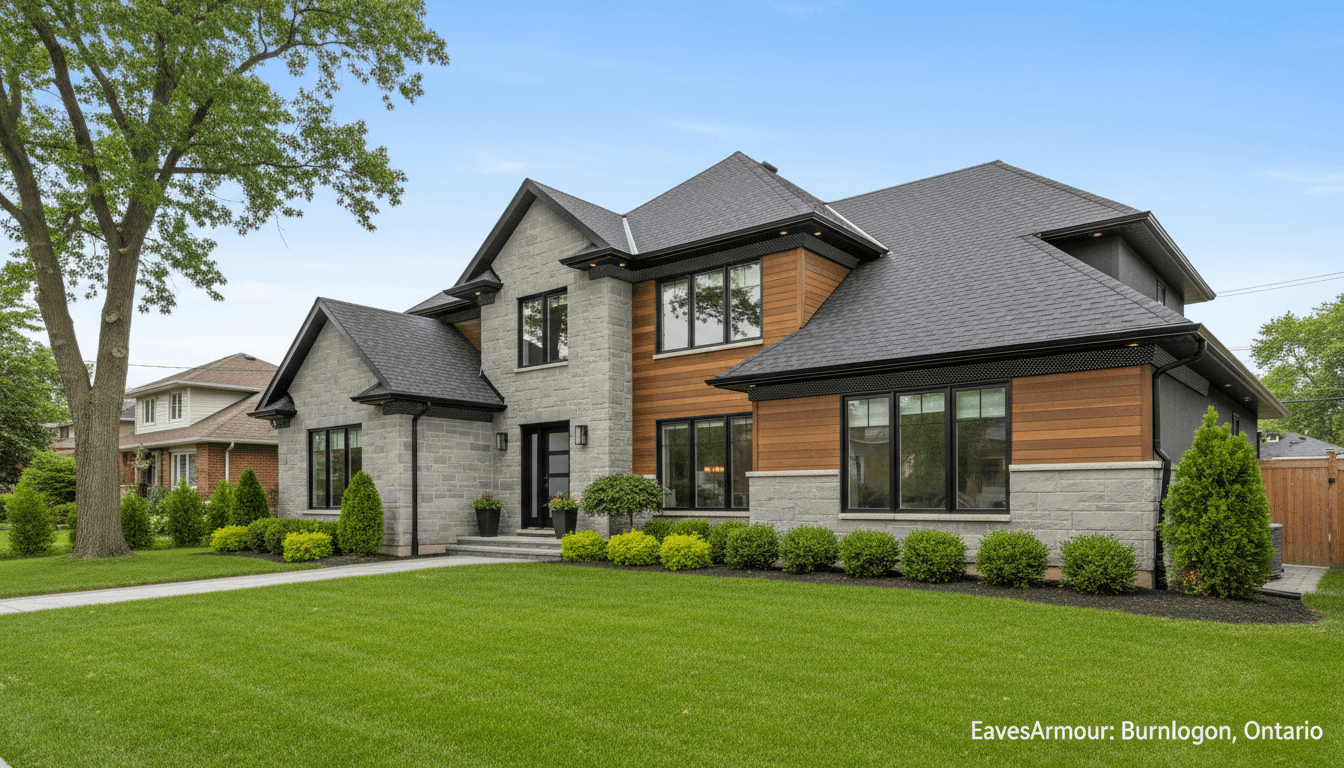
Burlington sits where Lake Ontario's shore meets the Niagara Escarpment — that gradient brings lake-moderated snowfall near the waterfront, heavy freeze-thaw cycling on Tyandaga and Brant Hills, and the towering canopy debris of Roseland's mature neighbourhoods. lifetime warranty, lifetime protection.
Quick form • 24-hour response
Expert installation with EavesArmour protection system
Our certifications and partnerships ensure you receive the highest quality installation and service standards




Premium products, expert installation, and unmatched customer service
Burlington real-estate moves — a transferable lifetime warranty adds documented value when you sell and gives the next owner the same protection from day one.
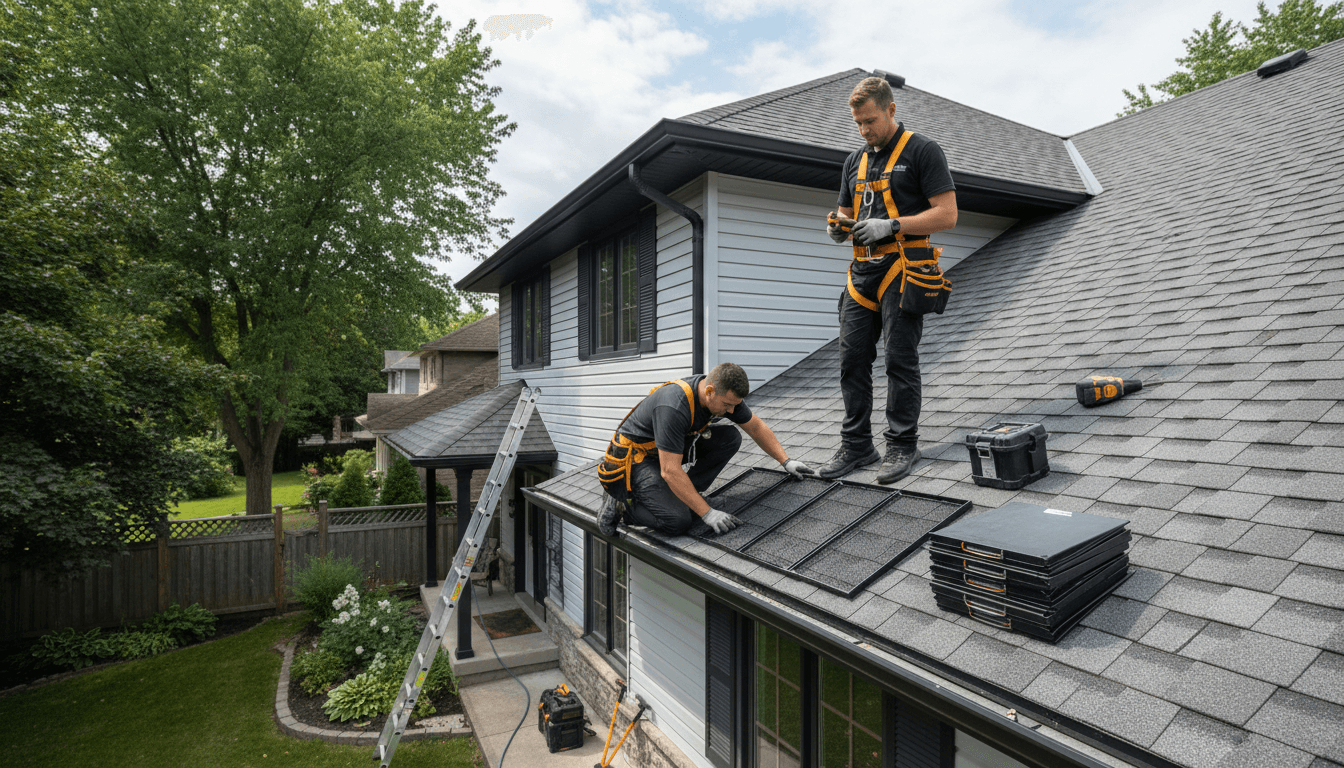
Our installers work Burlington year-round — from Aldershot bungalows to the steeper-pitched rooflines up on the Escarpment edge — fully licensed and insured in Halton Region.
Burlington's spring thaw and fall storm season can overwhelm gutters overnight. We offer same-day quotes and schedule around your timeline — weekdays or weekends.
Thousands of satisfied customers across Ontario with 4.9/5 average rating.
We know the difference between a lakefront home in Shoreacres that gets lake-effect snow and a newer build in Alton Village with minimal tree cover — and we spec systems accordingly.
Over 10,000 successful installations across Canada with zero-clog guarantee.
Premium solutions for every Burlington home
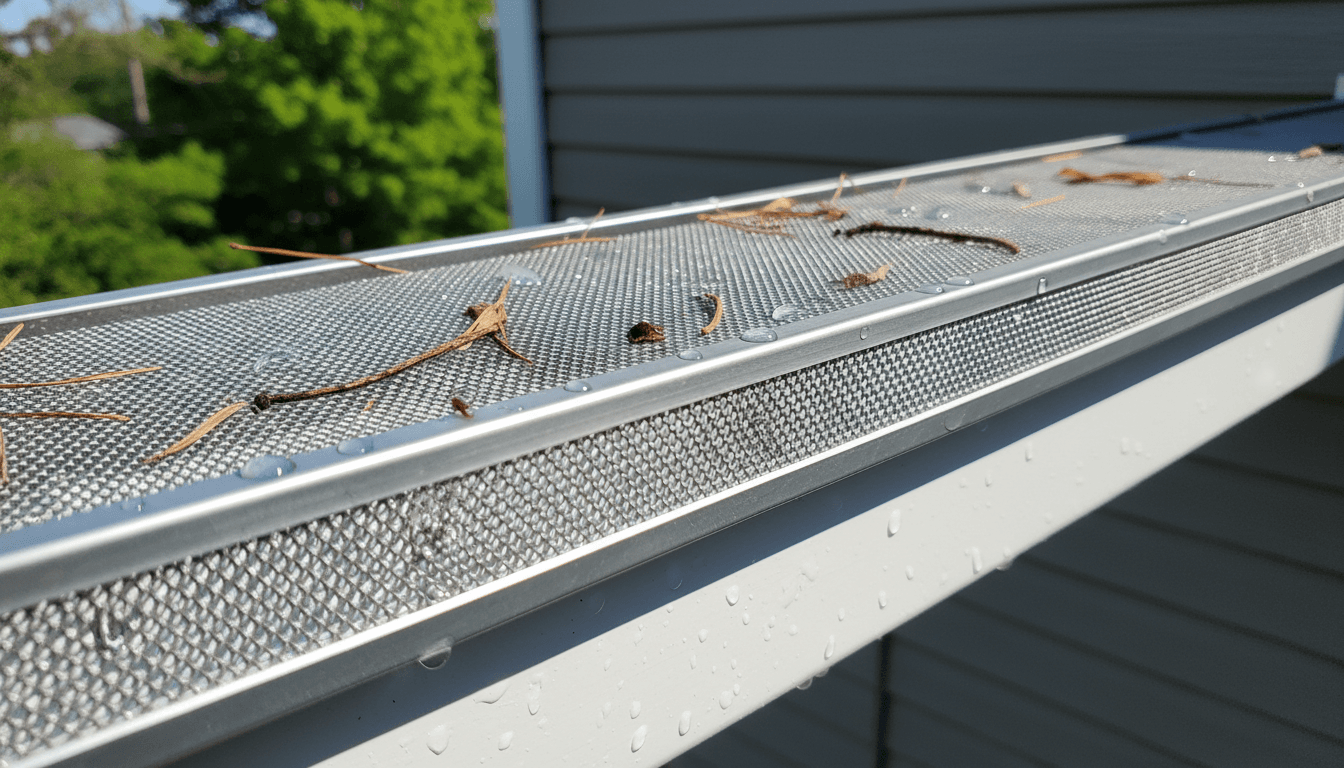
Burlington's mature Roseland and Shoreacres streets shed massive volumes of maple keys, oak leaves, and cottonwood fluff. Our 50-micron mesh handles it all while keeping water flowing through any downpour.
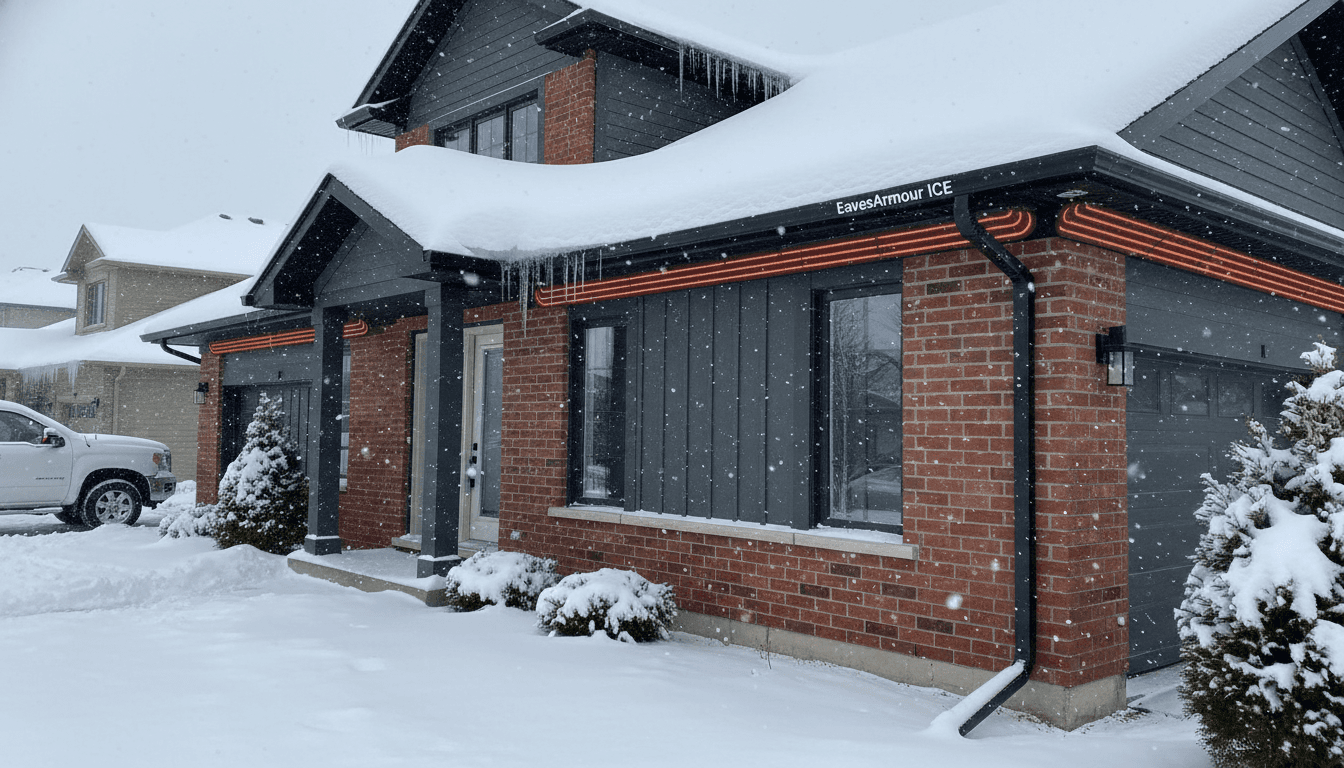
Homes on Tyandaga Ridge and Brant Hills face repeated freeze-thaw cycles that form ice dams fast. EavesArmour ICE uses self-regulating heat cables that activate automatically to keep melt water moving — before it re-freezes under your shingles.
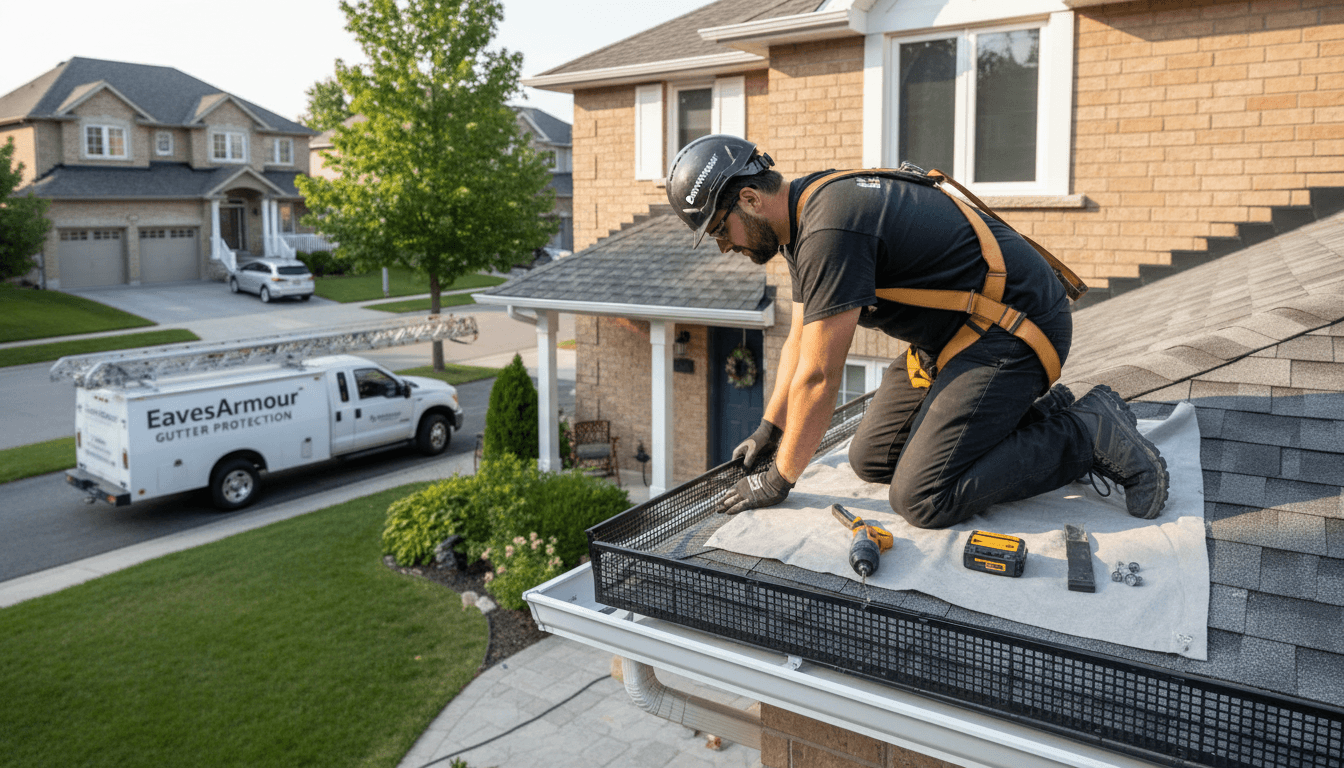
Whether it's a 1950s post-war home in Aldershot or a two-storey in Millcroft, we measure and fabricate seamless aluminum eavestroughs on-site to fit the exact roofline — no sections, no joints, no leaks.
Full debris flush and downspout clear-out before installation or as a standalone service — ideal prep for Burlington's high-debris fall season when oak and maple drop together.
Sagging sections, open mitre joints, and pulling fascia brackets are common in Burlington's older lakeside neighbourhoods after a few decades of freeze-thaw. We match existing material and pitch and get it draining straight.
Burlington's housing spans Victorian downtown streetscapes, Escarpment-side split-levels, and large Headon Forest two-storeys. We design protection plans around your actual roofline rather than pushing a one-size package.
Not sure which service is right for you?
Schedule Free ConsultationBurlington, located in Halton Region, experiences unique weather patterns that require specialized gutter protection
Burlington's lakefront picks up lake-effect snow cells that roll in off Lake Ontario from November through January — often delivering 15–25 cm in a single event that near-escarpment neighbourhoods barely see. Rapid melt adds sudden high volumes to gutters that need to flow freely.
Burlington's position between the warm lake air below and cold escarpment air above creates repeated above-zero/below-zero cycles in January and February. Each thaw-refreeze cycle grows ice at the eave edge. Our ICE system interrupts this cycle before the dam forms.
Burlington's tree canopy produces debris in three distinct waves: cottonwood and maple keys in May, heavy oak and maple leaves October into November, and pine needle shed through winter. Without micro-mesh, gutters clog at each phase.
Prevailing westerlies accelerate as they funnel off the Niagara Escarpment and across the lake. Tyandaga and Brant Hills bear the brunt. We use heavy-duty bracket spacing on exposed rooflines so guards stay put through 80+ km/h gusts.
Burlington summers run hot and humid with regular afternoon thunderstorms from June through August — a combination that drives algae and moss growth inside unprotected gutters. Our extruded, anodized aluminum doesn't rot, warp, or provide a growth substrate.
Burlington's annual temperature range exceeds 60°C — from humid +35°C August afternoons to -25°C cold snaps. Materials that expand and contract through that swing must be properly fastened. Our systems are tested to -40°C and remain dimensionally stable throughout.
From consultation to completion in 6 simple steps
Get Expert Assessment
Book your completely free consultation! Our certified specialist visits your Burlington home, measures your roof, evaluates your gutters, and provides personalized recommendations based on your property's unique needs.
Know Exactly What You Pay
Within 24 hours, receive your detailed quote tailored to Burlington with transparent pricing. No hidden fees, no surprises—just honest pricing with flexible financing options to fit your budget.
Your Time, Your Convenience
We work around YOUR schedule. Choose a date that works for you in Burlington, and we'll handle everything else—ordering custom materials, preparing our team, and confirming 24-48 hours before installation.
Professional & Efficient
Our certified team arrives on time at your Burlington home, cleans your gutters completely, and installs your premium micro-mesh system with precision. We work efficiently, minimize disruption, and clean up thoroughly when done.
Guaranteed Excellence
We test everything—water flow, secure attachment, proper alignment. Then we walk you through your new system, explain how it works, and provide complete warranty documentation.
Lifetime Warranty
Your journey doesn't end at installation. Enjoy industry-leading lifetime warranty, ongoing support, optional inspections, and prompt service whenever you need us.
Join hundreds of satisfied homeowners who chose EavesArmour. Book your free consultation now!
Burlington sits at the intersection of Lake Ontario's moderating influence and the Niagara Escarpment's cold-air drainage — a combination that creates weather conditions found nowhere else in Halton Region
Burlington's lakeshore is one of the most lake-effect-exposed stretches in the western Lake Ontario basin. Cold northwest winds pick up moisture crossing the open lake and deposit heavy localized snow on the lakefront and lower city — sometimes 20–30 cm in a single overnight event that Oakville or Hamilton misses entirely. When temperatures climb in March and April, that accumulated snow melts fast, sending concentrated water loads into gutters that are often still partially blocked by late-season debris.
EavesArmour micro-mesh maintains full flow capacity even during melt events. The open-mesh surface sheds wet leaf litter and ice crystals rather than allowing them to bridge and freeze across the gutter opening — the most common failure mode for lesser guard designs in Burlington's climate.
Roseland and Shoreacres are among the most heavily treed residential streets in Halton. The debris calendar starts in May with silver maple keys and cottonwood fluff, resumes in late September when oaks begin dropping, peaks in November with the full maple flush, and continues through winter with pine needle shed from the mixed evergreen stands along the Escarpment face. Homeowners in these neighbourhoods routinely clean gutters three or four times a year without protection.
Our 50-micron mesh stops all of it — maple keys, cottonwood, pine needles, shingle granules — without impeding water flow. Once installed, Burlington homeowners in high-canopy areas can walk past the downspouts through an entire November and not see a leaf in the outlet.
The Niagara Escarpment funnels cold air down into Burlington's upper neighbourhoods — Tyandaga, Brant Hills, and the Headon area — while the lake keeps lakeshore temperatures several degrees warmer. This temperature gradient means a single January week can cycle through freeze-thaw four or five times on a north-facing roofline. Each partial melt refreezes at the eave, and the ice dam grows a little taller with every cycle until it starts forcing melt water back under shingles.
EavesArmour ICE's self-regulating heat cables sense the eave temperature and activate only when the zone approaches freezing — not continuously — so operating costs stay reasonable even through Burlington's prolonged freeze-thaw windows. This is especially valuable on the shaded north and west rooflines of escarpment-facing homes where ice accumulates fastest.
Burlington's proximity to Lake Ontario produces humid summer conditions — frequent afternoon thunderstorms followed by warm, moist air. This humidity, combined with the organic matter that settles in unguarded gutters, accelerates algae and moss growth inside the trough. Over time, the added weight and moisture retention accelerates bracket corrosion and fascia rot, particularly on homes built before 1990.
Aircraft-grade aluminum doesn't provide a growth substrate the way plastic or foam-insert guards do. The open-flow micro-mesh design means gutters drain completely after each rain rather than holding standing water — the primary condition that permits moss and algae colonisation in Burlington's humid summers.
Common questions about gutter guard installation in Burlington
Burlington installations typically run $15–$25 per linear foot for micro-mesh guards, depending on your home's linear footage, roof pitch, existing gutter condition, and whether any cleaning or repair is needed first. Homes in Roseland and Shoreacres with complex rooflines or very high canopy tend toward the higher end due to prep time. We provide a fully itemised, no-obligation quote after the on-site assessment.
Yes — we cover all of Burlington's communities, including the lakeshore, Aldershot, Roseland, Shoreacres, Tyandaga, Brant Hills, Millcroft, Alton Village, and Headon Forest. Our team is on the road in Burlington regularly, so booking a same-week visit is usually straightforward.
Most Burlington installs are single-day jobs. A standard two-storey with 180–220 linear feet of eavestrough takes 5–8 hours including gutter cleaning, guard fitting, and final water-flow test. Homes with complex hip roofs or multiple valleys — common in Millcroft and the newer Alton Village builds — may run slightly longer. We confirm the timeline at your free consultation.
Yes, and Burlington's specific climate is precisely why we offer the EavesArmour ICE system alongside micro-mesh. The lake-effect snow and Escarpment freeze-thaw cycling create conditions that defeat foam inserts and reverse-curve guards quickly. Our micro-mesh stays functional because it sheds ice and debris rather than trapping them; the optional ICE heat-cable system handles the freeze-thaw ice dam risk on north-facing and shaded rooflines.
All EavesArmour installations carry a lifetime transferable warranty on materials plus a workmanship warranty on the installation itself. If anything shifts, leaks, or needs adjustment — whether it's six months or six years after we were on-site — our service team comes out and addresses it. Burlington customers can reach us directly; we don't route warranty claims through a national call centre.
Yes. We work with financing partners that allow Burlington homeowners to spread the cost over time. Details and current terms are discussed at your free consultation — there's no obligation to proceed, and we don't pressure-sell financing.
Most competitors serving Burlington are regional volume installers using off-the-shelf reverse-curve or foam-insert products. EavesArmour's 50-micron micro-mesh is purpose-built for Ontario's debris and ice environment, and our lifetime transferable warranty is the longest in the category. Critically, we're specific about Burlington's geography — the lake-effect snow exposure at the lakeshore, the freeze-thaw risk on escarpment-facing lots, the heavy canopy debris in Roseland — rather than applying a generic Ontario pitch.
Yes. Downtown Burlington and the older lakeside streets have homes with non-standard fascia widths, decorative bargeboards, and profiles that don't accept off-the-shelf guard widths. We custom-cut on-site to match the existing eavestrough profile — the same way we handle Victorian streetscapes in other Halton communities — so the finished installation looks intentional rather than retrofitted.
The clearest indicators are: visible ice build-up along your eave edge during January or February; water stains on interior ceilings or walls near exterior walls in late winter; or a north- or west-facing roofline that stays in shadow all day during the winter months. Homes in Tyandaga, Brant Hills, and the upper areas of Millcroft are the most common candidates. During your free consultation, we check sun exposure and roof orientation and give you an honest assessment of whether the ICE system adds value for your specific property.
EavesArmour serves Burlington and the surrounding Halton and Hamilton communities — including Oakville, Waterdown, Flamborough, Dundas, Ancaster, and Milton. If you're on the Burlington–Hamilton boundary near Waterdown Road or the Burlington–Oakville line near Appleby, we cover both sides. Contact us to confirm coverage for your address.
EavesArmour also serves the Halton Region communities of Milton and Halton Hills.
Understanding the true cost and long-term value of gutter guard installation in Burlington
Gutter guard installation in Burlington typically costs $15-$25 per linear foot, depending on several factors:
Average Investment
$3,000 - $5,000
For typical Burlington home (200 linear feet)
Professional gutter guards provide significant savings over time for Burlington homeowners:
Potential Savings Over 10 Years
$5,000 - $20,000+
Depending on damage prevention
Most Burlington homeowners see a return on investment within 3-5 years through eliminated cleaning costs and prevented damage. With our lifetime warranty, the system continues providing value and protection for decades, making it one of the most cost-effective home improvement investments available.
Need the exact numbers? See our 2026 Burlington gutter guard cost guide for Burlington pricing benchmarks, financing options, and an honest EavesArmour vs. LeafFilter breakdown.
See why Burlington homeowners choose EavesArmour over competitors
| Feature | EavesArmour | Other Companies |
|---|---|---|
| Lifetime Transferable Warranty | 5-10 years | |
| 50-Micron Micro-Mesh Technology | ||
| Certified Local Installers | Varies | |
| Free Consultation & Quote | ||
| Same-Day Installation Available | Limited | |
| ICE System for Winter Protection | ||
| Maintenance-Free Operation | Requires cleaning | |
| Energy-Efficient Design | Varies | |
| Custom-Fit Installation | Standard sizes | |
| 4.9/5 Customer Rating | 3.5-4.5/5 |
Still weighing options? Read our gutter guard types comparison and learn how our heated ice dam prevention system protects Burlington homes through Lake Ontario winters.
See the transformation our gutter guard systems provide for Burlington homeowners
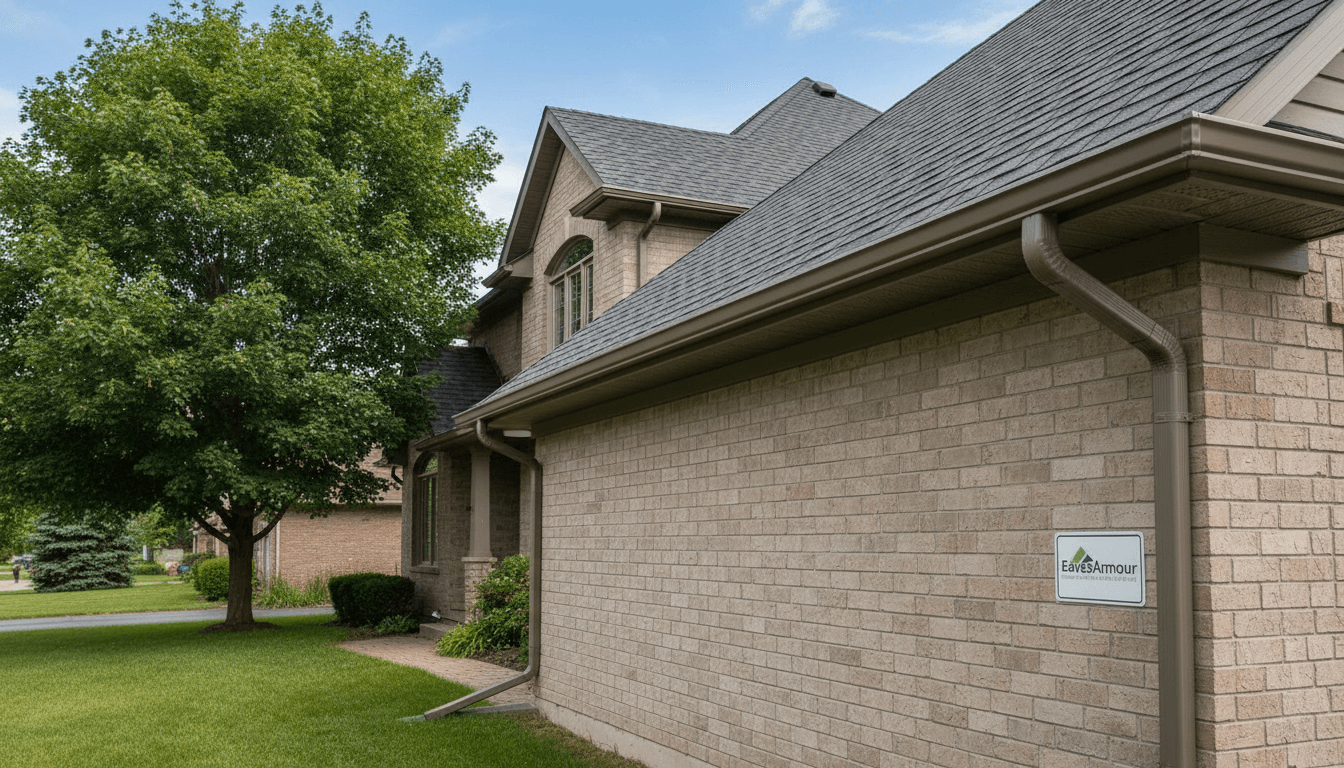
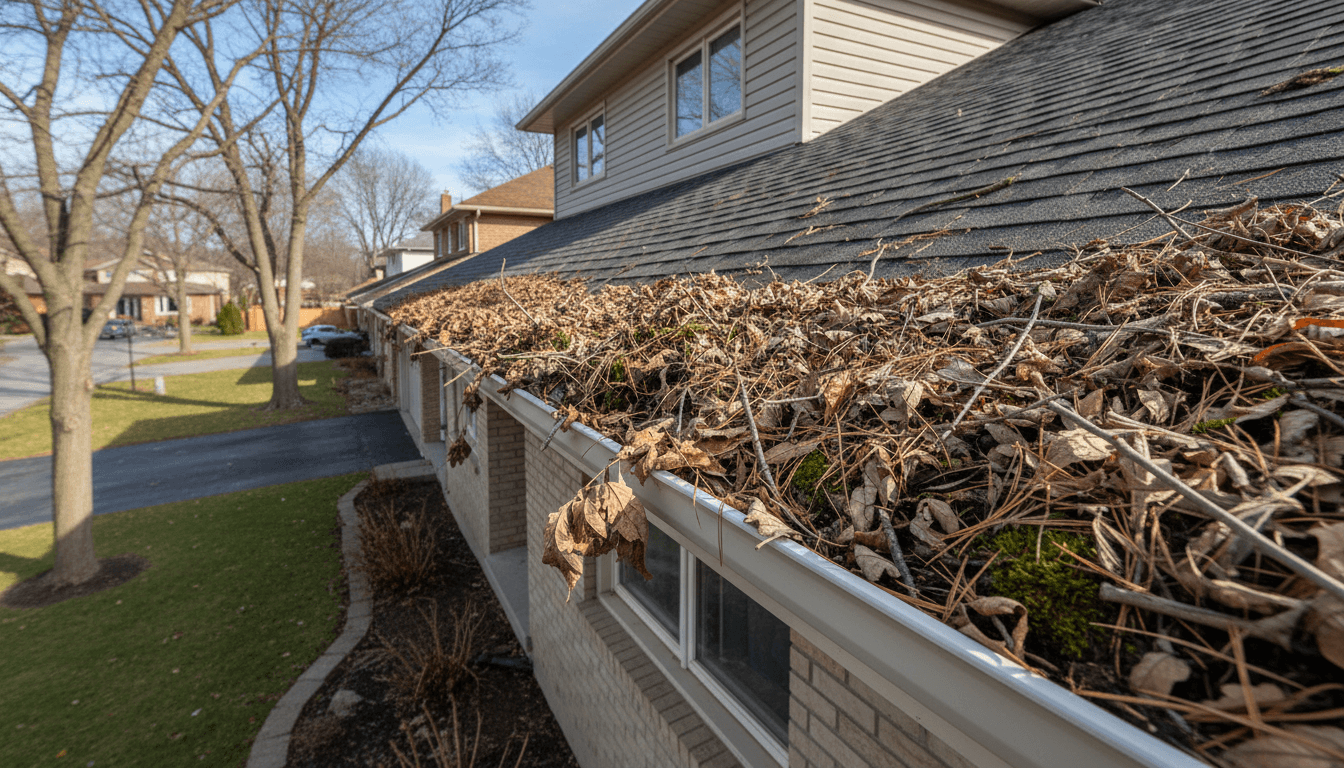
Burlington, Ontario
Professional micro-mesh installation eliminates all debris while maintaining perfect water flow
Ready to protect your Burlington home? Schedule your free consultation and get a detailed quote. Our expert team will assess your home and provide personalized recommendations.
We'll assess your Burlington home and discuss your needs
Receive a detailed, no-obligation estimate
Our certified team installs your system
Enjoy maintenance-free gutter protection
Join hundreds of Burlington homeowners who never worry about clogged gutters again
Get your free consultation and detailed quote today. No obligation, no pressure - just expert advice and premium protection for your Burlington home.
Updated September 25, 2026 · Burlington-specific guidance from our Halton Region installation team
Burlington's position at the western tip of Lake Ontario creates weather patterns that directly affect how gutters perform and when they need protection. Lake-effect moisture keeps debris season extending later than inland cities; the Niagara Escarpment to the south funnels cold air drainage across upper Burlington neighbourhoods all winter. Understanding these patterns is the key to getting Burlington's gutter season timing right — and avoiding the expensive freeze-damage that catches homeowners off-guard in January.
Burlington's lakeshore neighbourhoods — Shoreacres, Roseland, and the waterfront streets — receive significantly more humidity-driven organic growth in gutters than inland Ontario cities. Moss, algae, and lichen establish quickly in unprotected troughs exposed to lake-effect mist. Our micro-mesh gutter protection eliminates the standing water that feeds this growth by keeping channels clear year-round, not just after fall cleanup.
Homes in the Bronte, Millcroft, and Tansley neighbourhoods drain toward the Bronte Creek watershed. When gutters overflow during Burlington's frequent September–October rain events (25–50mm totals are common), the resulting ground saturation elevates foundation seepage risk significantly in clay-heavy Halton Region soils. Proper eavestrough flow maintained by guards keeps that water directed to downspouts and away from foundations where it belongs.
Burlington's two-phase debris season starts in late September when silver maples begin dropping in Aldershot and central Burlington, then extends through mid-November as oaks and ash trees in Roseland, Tyandaga, and upper Millcroft complete their fall. This six-to-eight-week window — longer than most Ontario cities due to lake-effect temperature moderation — means a single annual cleaning often isn't enough. Guards eliminate the need for mid-season emergency calls entirely.
Installing before the main leaf drop gives Burlington homeowners immediate protection through the full fall debris cycle and guarantees freeze-ready gutters before January. Our crews are busiest from late October onward — booking in September typically means a two-to-four day lead time rather than two-to-three weeks. Get your free instant estimate now, or call 647-931-0441 to lock in a September appointment for your Hamilton or Burlington area home.
Burlington homeowners: our team serves all postal codes from the lakeshore north to Dundas Street and from Aldershot east to Appleby Line. Same-week appointments available through September.
Updated September 25, 2026 · From our Burlington and Halton Region installation team
Late September through mid-October is Burlington's optimal installation window. Burlington's position at the western tip of Lake Ontario moderates fall temperatures, extending the leaf-drop season later than most Ontario cities — silver maples in Aldershot and central Burlington begin dropping in late September, while oaks and ash trees in Roseland, Tyandaga, and Millcroft continue through mid-November. Installing before the main leaf drop means guards are fully active through the entire debris season. Booking in September typically secures a two-to-four day lead time; October bookings often run two to three weeks. Our Burlington scheduling calendar fills quickly as October approaches.
Lakeshore homeowners in Shoreacres, Roseland, and the waterfront streets along Lakeshore Road benefit from the EavesArmour ICE heated cable system paired with micro-mesh guards, particularly on north-facing rooflines. Lake-effect moisture keeps eave gutters wetter longer than inland properties, increasing the freeze-thaw cycling that causes ice to back up under shingles. The ICE system maintains a melt channel at the eave edge and inside downspouts even when overnight temperatures drop below −15°C — preventing the interior ceiling damage that often catches waterfront homeowners off-guard in January and February. One prevented ice event covers the cost of the system in full.
Most Burlington installations are completed in a single day. A standard two-storey home in Millcroft, Alton Village, or Headon Forest (140–180 linear feet) takes four to six hours with a two-person crew. Heritage and custom homes in the older lakeside streets with complex roofline details or non-standard gutter profiles take slightly longer but rarely require a second day. Your on-site quote includes a time estimate based on your specific home's footage and roofline complexity. See our pricing guide for Halton Region homes for cost expectations by property type.
Yes. Guards installed over accumulated debris lock it in place and defeat the purpose of the system. EavesArmour's Burlington installation includes a pre-installation gutter flush and inspection at no extra charge. If we find significant blockages, sagging sections, or joint separations, we address them before fitting the guards. Homes in Shoreacres and Roseland with heavy organic growth from lake-effect moisture may benefit from a standalone professional eavestrough cleaning first, followed by the guard installation as a separate visit — our team advises on-site which approach is most cost-effective for your property.